In a world where headlines can move markets from one day to the next, at MyFarm we continue to focus on long-term investment fundamentals. In this insight, we will show you how that thinking shapes our view of the most investable opportunities in New Zealand’s primary sector. We believe selective real assets can provide investors with diversification, investment in assets with tangible utility, and steady cash flows, underpinned by leases or diversified production – all of which are increasingly important in uncertain times.
At a macro level, today’s investment backdrop looks increasingly volatile, with current geopolitical events creating uncertainty across many sectors. We are witnessing, in real time, energy and freight disruptions, wide swings in oil prices, and knock-on risks to inflation and activity, all of which make forward planning challenging. The growth of AI is also an investment disruptor, with likely winners and losers in the race for dominance, along with potential industry-wide disruption in services and other sectors.
This kind of complexity tends to favour real assets with durable underlying demand and real-world value. The market has coined a term for this – the HALO trade (Heavy Assets, Low Obsolescence). Farming and growing businesses require infrastructure, equipment and real-world operations that AI cannot replace, and these ‘real-world’ businesses may be a steadier place to invest.
Why does the primary sector remain attractive?
Few countries can produce high quality food and fibre like New Zealand. We pair natural growing advantages and technological innovation with mature post-harvest system and export-ready infrastructure. Innovative operators are increasing the productivity of our rural land, creating unique investment opportunities. This unique commercial environment creates the opportunity for long-term sustainable competitive advantage across several sectors, providing growers and investors with more resilience and an asset base that is often uncorrelated to other asset classes.
From an “investability” lens, we look for sectors with:
- Structural demand (products/services that remain in demand across cycles).
- Supply discipline and quality differentiation (so that investors can benefit from higher pricing and margins, not becoming stuck in a “pure commodity” cycle), and
- Strong operating partners and contracted or diversified income (so the investment isn’t relying on perfect conditions).
Taking all this into account, in 2026 we see attractive opportunities in premium horticulture (kiwifruit), rural commercial property, and renewable energy. Below, we explain why we think these sectors have long-term potential for wholesale investors and can withstand volatility.
Example 1: Premium Horticulture
Kiwifruit remains one of the hottest prospects for agri-investment in New Zealand as it combines the best of premium branding, strong and increasing demand from export markets, and uniquely “New Zealand” production advantages.
It’s also a powerhouse of New Zealand’s exports, ranking fourth among primary sector exports after dairy, meat, and forestry. Underpinning the industry's success is Zespri – New Zealand’s sole seller and marketer of kiwifruit overseas - which has built a global brand that consumers are willing to pay a premium for. These positive characteristics combine to create good profits and returns for growers and investors.
Demand for our kiwifruit also looks set to grow further. In its Five-Year Outlook (2025), Zespri remains confident of a positive medium‑term demand outlook (circa 10% annual volume growth) underpinned by product quality, trusted brand positioning, and ongoing investment in marketing and supply chain execution.
Within that sector, the MyFarm KiwiFruit Fund provides exposure to the industry at scale via eighteen orchards (167 canopy hectares) and 3.64 million Zespri shares within an established fund structure. As one of the largest investment vehicles in kiwifruit production, the Fund provides a rare opportunity to gain a diversified, passive exposure to both orchard and industry returns. The fund targets an annual total return of 10% p.a. with an annual target cash distribution of 6-9% p.a.
You can find out about the MyFarm KiwiFruit Fund HERE
Example 2: Rural Commercial Property.
We also see value in infrastructure that helps the food and fibre sector operate efficiently, particularly where income is underpinned by long‑term leases and assets are purpose‑built and hard to replicate.
Supporting Infrastructure
Duncannon Horticulture LP is a good example of rural commercial property that helps underpin our productive primary sector. The Partnership provides exposure to purpose‑built Recognised Seasonal Employer (RSE) accommodation in Marlborough and the Bay of Plenty, leased to established counterparties (Hortus and Southern Cross Horticulture). The RSE scheme plays a key role in addressing labour constraints in horticulture and viticulture; constraints that can otherwise limit output and quality of the crop produced, so accommodation is strategically important to the wider sector.
The Duncannon Partnership has a weighted‑average lease term of approximately 10 years, a net‑lease structure (with tenants responsible for most outgoings), and annual rental adjustment features, alongside a current monthly distribution of 7.5% p.a.*
You can find out more about the Duncannon Horticulture LP HERE
Production Infrastructure (Poultry Production Facilities)
Ownership of New Zealand poultry production facilities offers a rare combination of staple consumption and lease income. Chicken remains New Zealand's most consumed protein – the average New Zealander consumes over 40kg of chicken per year, supporting steady demand even when household budgets tighten. The industry is structurally protected: rigid biosecurity measures limit imports of chicken meat, helping underpin domestic pricing and processor utilisation. Investors see value in ownership of the specialised poultry production buildings, which are leased long-term to an established national operator, where CPI-linked rent reviews and tenant-paid outgoings can translate into inflation-resilient, passive cash flows.
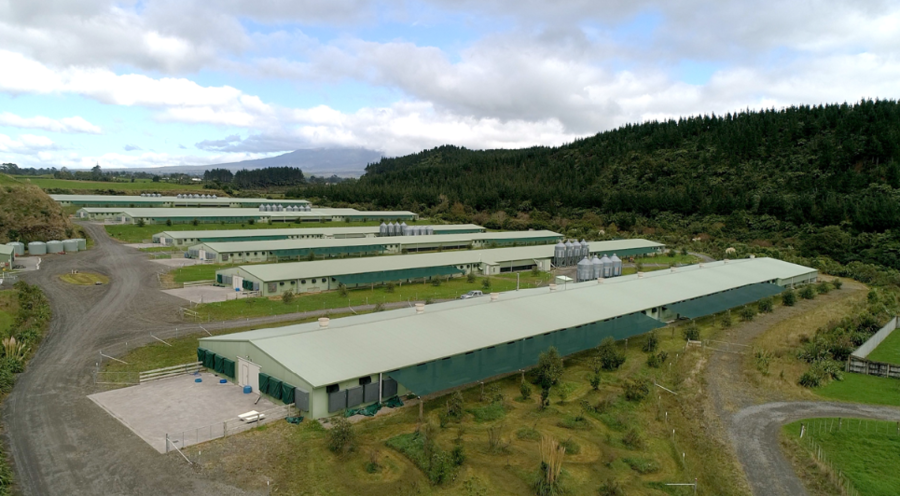
A free-range poultry production facility owned by Kaipi Road Limited Partnership in Taranaki.
Furthermore, as New Zealand’s existing portfolio of poultry facilities approaches the end of its economic life and new technologies are adopted across the sector, compelling opportunities are emerging in facility development and operation.
Example 3: Renewable Energy
The demand backdrop for renewable energy investment is compelling: MBIE scenarios show total electricity demand rising by 35%–82% by 2050, with new wind and solar the least-cost way to meet most new demand. That combination suits investors seeking real-asset exposure.
Small-scale renewable projects—like mid-scale 5MW solar farms, can be a smart investment in New Zealand because they combine build efficiency with contracted revenue. These sites, often positioned on unproductive rural land, can avoid a Transpower connection and are typically easier to consent to and construct, helping keep development timelines short and costs tight. Returns can be underpinned by long-term Power Purchase Agreements, with pricing reviewed annually (for example, PPI -linked) to add durability.
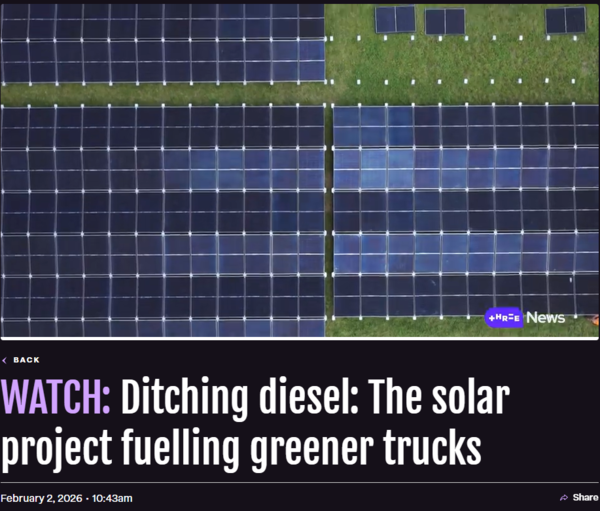
The first solar farm from the MyFarm Solar Fund is nearly complete. Watch a recent news article about its development HERE.
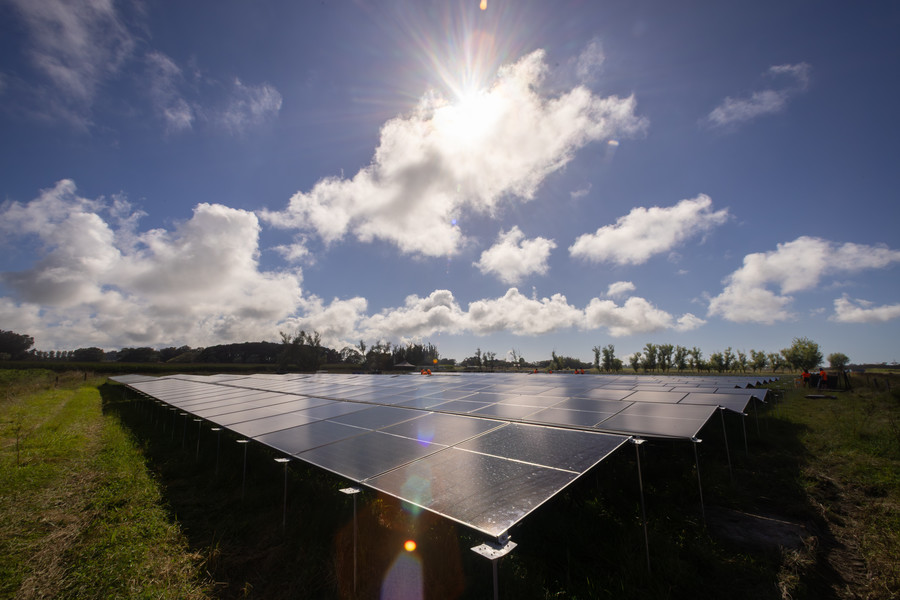
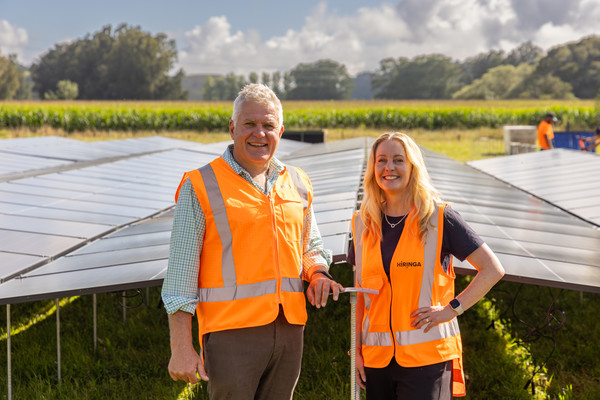
The MyFarm Solar Fund's first solar farm in Ruakākā in Northland (Feb 2026).
One to Watch: Carbon and Production Forestry
Carbon forestry can look noisy day-to-day because NZU pricing moves with policy, auction settings, and market sentiment, but the underlying asset is productive timberland—an asset class many institutional portfolios continue to back for its resilience and diversification benefits. MyFarm is investing from a position of proven execution: the original CQuest LP investors received $1.50 for every dollar invested in under four years following a sale to an institutional buyer. We have now syndicated a follow-up carbon forestry Partnership: CQuest Forestry Fund LP, targeting returns from both NZUs and timber, backed by the same capability, set to create investor value over the long term.
Conclusion
Stepping back, our 2026 investing thesis is straightforward: we are prioritising real assets tied to essential activity in New Zealand’s primary sector, where return drivers are anchored in structural demand, quality, supply discipline, and lease-backed income rather than short‑term sentiment. Across our three core focus areas, premium horticulture, rural commercial property and renewable energy, we are looking for assets with real‑world utility, capable operating partners, and resilient cashflow pathways (leases, long‑term contracts), diversified asset bases and established production systems.
In an environment where volatility and “headline risk” can obscure fundamentals, we believe this discipline helps investors stay selective, diversify return drivers, and maintain exposure to sectors with durable long‑term relevance.
If you would like to discuss how these themes apply to our current Offers, please get in touch with the MyFarm team.
Open to wholesale investors only.
Disclaimer:
The information contained in this article is for general information purposes only. Any reliance you place on such information is strictly at your own risk. It is not intended to constitute legal or financial advice and does not take your individual circumstances and financial situation into account. We encourage you to seek assistance from a trusted financial adviser, legal or other professional advice.